
Tunnel Kiln Lining Upgrade
Application Scenario
Industrial ceramic tunnel kilns/roller kilns run continuously. Peak firing temperature is commonly around 1260 deg C (varies by product, curve, and soak time). In the cost structure of these kilns, shell heat loss and thermal bridges are a "year-round fixed cost." Once hot spots and leak points form, energy use stays elevated, while temperature drift and defect variability are amplified.
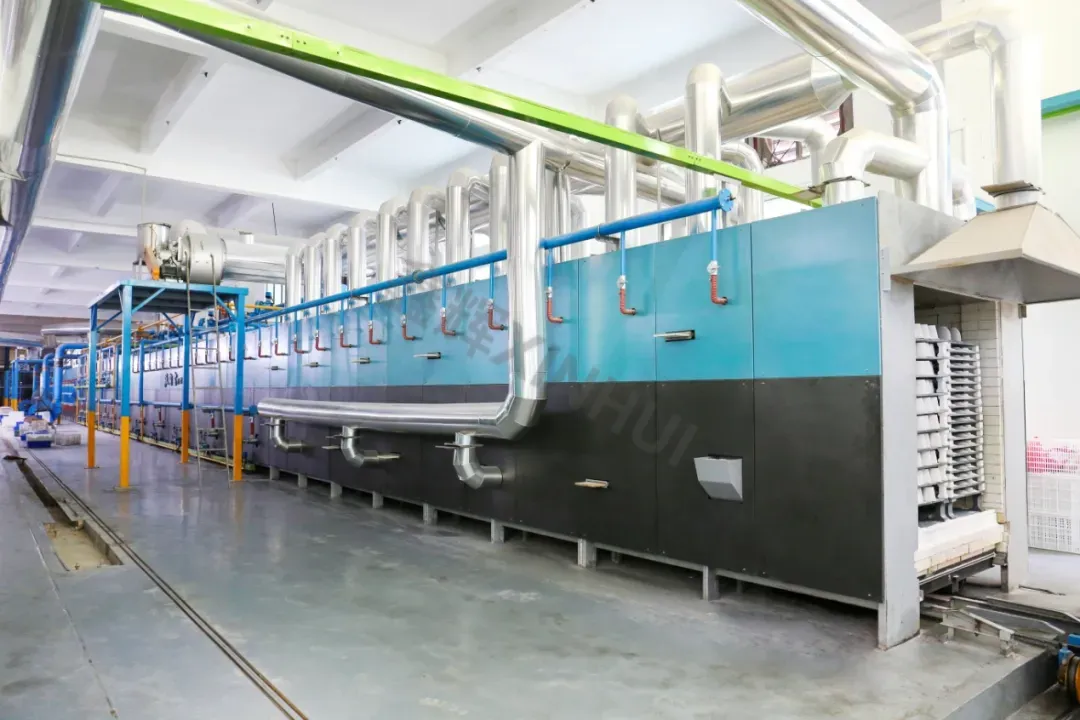
Focus Areas for Lining Upgrade
- Shell heat loss: high shell temperature, local hot spots, insufficient thermal resistance at the roof and walls that keep sending heat out.
- Thermal bridges and leakage: kiln doors, view/inspection ports, joints between kiln car and wall, expansion joints, roller ends and bearing zones.
- Structural service life: hot-face layer must resist erosion, thermal shock, and wear; maintenance and partial replacement should be convenient.
- Gas tightness and sealing: door area and kiln car edges determine whether heat leaks out through gaps.
Xinhui Implementation in This Application
Backup Insulation: Lightweight Mullite/IFB
Lightweight mullite insulating bricks serve as the main backup insulation, reducing thermal conductivity and heat storage. Two on-site goals: more uniform shell temperature rise and faster heating response (reducing the wall's heat soak inertia).
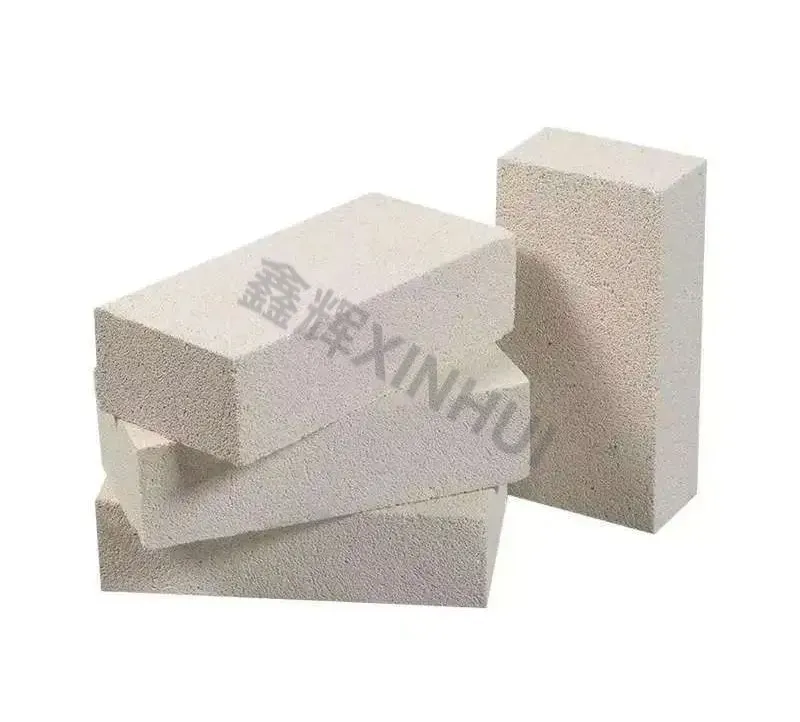
Layered Structure: Hot-Face Duty + Backup Heat Loss Control
-
The hot-face layer uses dense brick/castable systems for load bearing, abrasion, and corrosion resistance.
-
The backup layer uses lightweight insulation (mullite IFB/insulating bricks) for insulation and reduced heat storage.
The point of layering is to separate high-temperature duty from insulation goals, avoiding continuous heat transfer to the shell through high-conductivity materials.
Fiber System: Roof, Expansion Joints, Kiln Car Edge Sealing
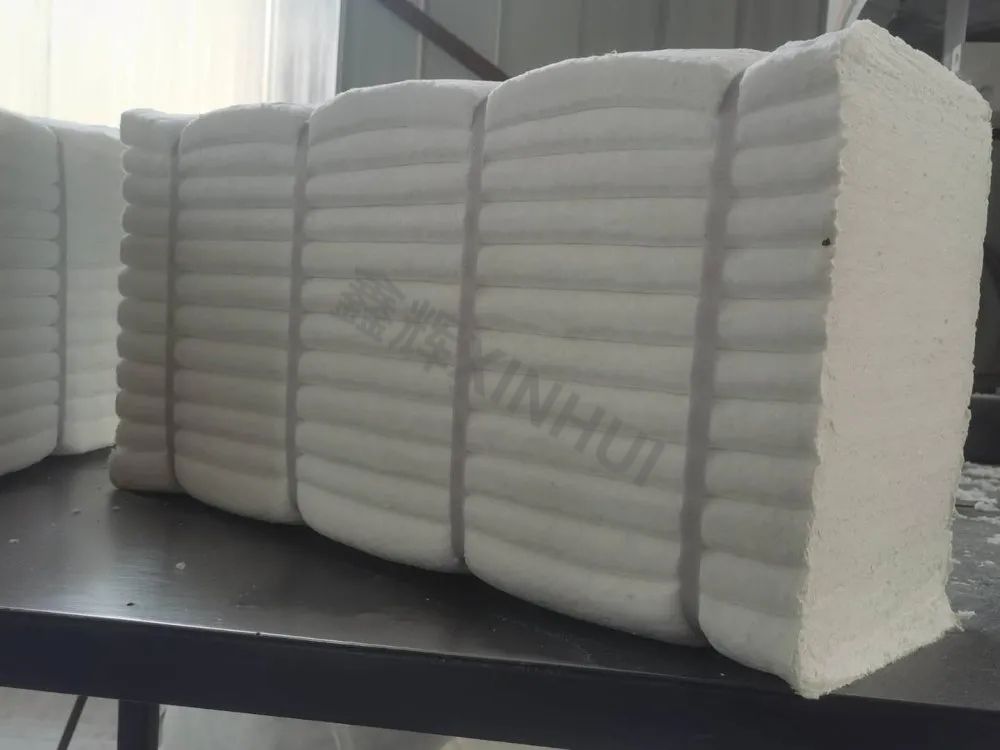
Ceramic fiber felt/blanket/board/modules are used in three positions:
- Roof and crown: reduce roof heat loss and thermal bridges.
- Expansion joints: provide thermal expansion compensation and reduce leakage paths.
- Kiln car edges and doors: continuous sealing and flexible compensation to suppress gap leakage and "fixed hot spots."
Thermal Bridge Cleanup: Remove Hot Spots Structurally
Focus on these locations and resolve one by one:
- Kiln doors and frames: thermal breaks, continuous overlaps, multi-layer sealing.
- Joints between kiln cars and walls: edge sealing structure with wear protection.
- Access/view ports: segmented insulation sleeves plus end-face compression sealing.
- Roller ends: prioritize structural short-circuits and leakage points.
Data-Driven Optimization Entry Points
Three types of data are enough to infer weak spots in thermal resistance and guide structure/material choices:
- Kiln curves: set vs actual per zone, overshoot, recovery time, kiln car cadence.
- Energy and power: segmented statistics (ramp/soak/standby), long-term baseline and fluctuation.
- Defects and location: product defects (warp, color difference, cracking, glaze issues, etc.) mapped to kiln/car positions.
Overlay defect hot spots with shell hot spots and zones with strongest power compensation to quickly lock onto: doors, kiln car joints, expansion joints, local roof weak spots, and wall thermal bridges.
Changes After Implementation
- Shell hot spots shrink: door area, kiln car edges, access ports show more uniform shell temperature and smaller local high-temp zones.
- More stable zones: smoother power compensation, faster recovery, reduced long-cycle drift.
- Smoother cadence: faster ramp response, process curve stays closer to the target window.
- Easier maintenance: more stable hot-face layer, more reliable sealing, controlled local maintenance.