
95 Alumina Square Head Ceramic Ferrules
Designed for tubesheet and tube inlet protection in waste heat boilers connected to Claus reaction furnaces and tail gas incinerators in sulfur recovery units (SRUs). The square head covers the hot face of the tubesheet, while the tube extends into the heat exchanger inlet. Together with fiber isolation materials, these components reduce direct exposure to hot process gas.
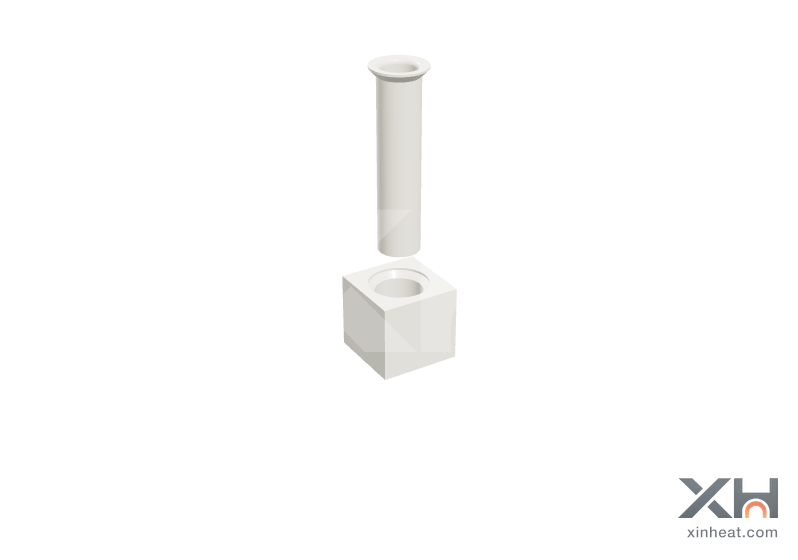
95 alumina ferrules require attention to gas flow, thermal cycling, tubesheet layout and installation clearance. The bore, flared mouth and mating surfaces must retain the required geometry after firing.
From powder to finished ceramic
Cold isostatic pressing produces a green body that can be machined and sintered. The following eight stages illustrate the manufacturing and assembly considerations.
1. Powder preparation
Mix, granulate and screen the powder for the 95 alumina material system. Consistent flow helps fill the narrow space between the mandrel and flexible mold. Particle size and moisture variations can create uneven packing that only becomes apparent after firing.
2. Mold design
A mandrel forms the bore, a flexible mold contains the powder, and end plugs seal the assembly. The square head and tube are formed separately. Mold dimensions must allow for sintering shrinkage, machining stock and demolding. Mandrel alignment influences bore position.
3. Filling and sealing
Fill in stages, compact gently and remove trapped air while keeping the mandrel aligned. Seal the mold to isolate the powder from the pressure medium. Trapped air can expand during decompression and crack the pressed body.
4. Cold isostatic pressing
Liquid transmits pressure around the sealed flexible mold, compacting the powder into a green body. Pressurization, holding and gradual decompression must work together. After removing the plugs, mandrel and mold, the body still needs machining and firing.
5. Green machining
The tube has a flared mouth and curved transitions. The head bore must match the tube profile. Green machining creates these features while preserving sintering allowances. Low green strength requires careful clamping and cutting to protect the long tube and thin mouth.
6. Binder removal and sintering
Heating removes forming additives; sintering bonds the particles and reduces porosity. The parts become harder and shrink. The thick head and thin tube require suitable support and thermal schedules to limit distortion and cracking during heating, soaking and cooling.
7. Finishing and inspection
Inspect appearance, profiles and mating surfaces after firing. Diamond grinding may be applied to critical areas as specified, followed by checks of alignment, end faces and installation surfaces. Final grinding cannot correct every earlier error. Confirm material properties against the agreed inspection requirements.
8. Fit and delivery
Position the head, insert the tube and seat the flared mouth. Check the complete arrangement with isolation materials, installation clearance and actual tubesheet spacing. Pitch variation, contact conditions and thermal expansion space must be confirmed before batch manufacture, packaging and delivery.
Related manufacturing experience
Flanged ceramic tubes use a similar chain of mandrel and flexible mold preparation, powder filling, pressing, green turning and sintering. Square head ferrules require redesigned tooling, profiles and mating geometry. Published industry experience also highlights that excessive tube pitch variation can prevent installation, so the surrounding equipment matters as much as the individual part.
Custom supply and maintenance replacement
For new SRU equipment, waste heat boiler maintenance or changes to existing ferrules, send drawings or samples together with process gas temperature and atmosphere, tubesheet pitch, installation clearances, quantities and acceptance requirements. Material selection, fit and delivery can then be reviewed together.
Contact Xinhui about custom ceramic ferrules
Phone / WeChat: +86 182 218 96868